


So… this dishcloth has been sitting in my pattern files for about four years. Yup, my friend Kryss tested and approved it, and then… well… it joined the very long list of projects waiting for their turn. 😂
When I first designed the Gardenlace Dishcloth, I loved the texture and simplicity of the stitch combination, but I never got around to sharing it. You know how it goes… new ideas come along, seasons change, and sometimes a finished project gets tucked away and forgotten.
Now its was finally time to pull this one out of my files and share it with you.
Over the years, the Suzette stitch has become a favourite among crocheters, and I completely understand why. It creates a beautiful textured fabric using just basic stitches, making it a great choice for beginners while still being interesting enough for more experienced crocheters.
Some of first designs used this stitch and the Buddy Bear is still a top seller after 15 years! And soon I am going to add more of the Montgomery series to the blog, all which use the suzette stitch and all which are still super popular over on Etsy.
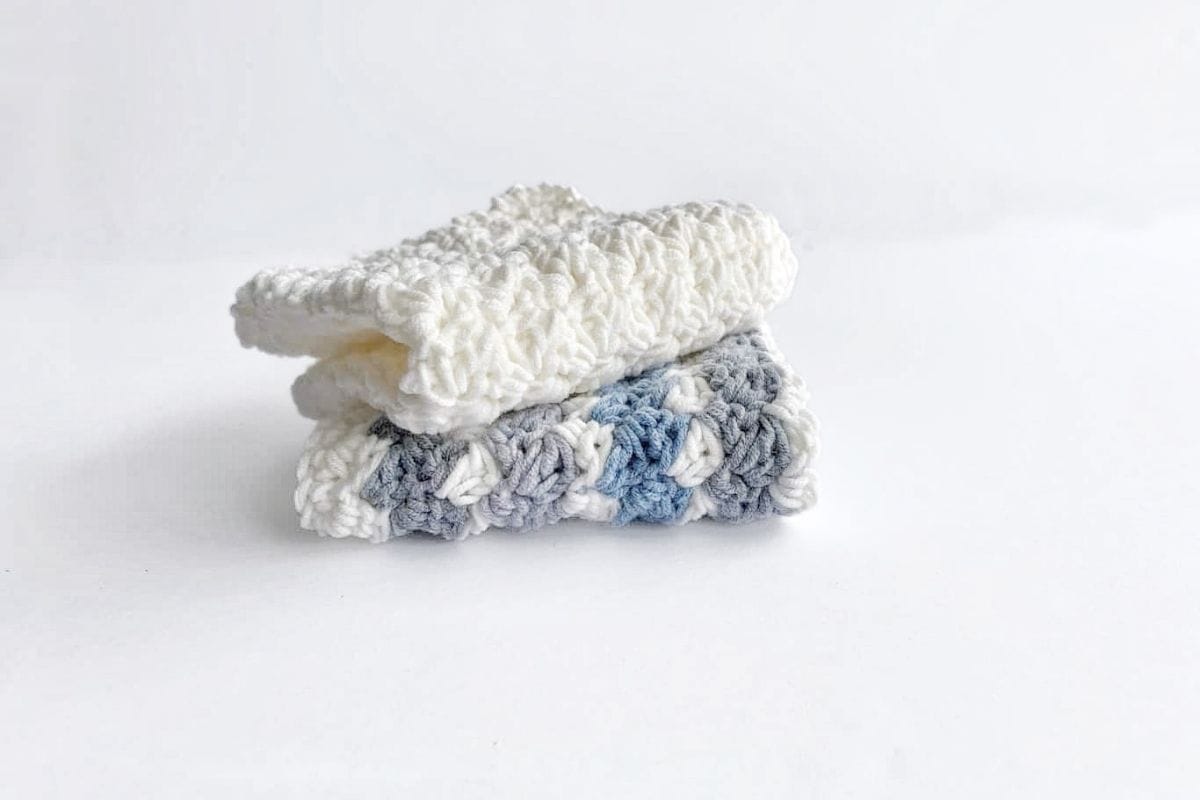
The Gardenlace Crochet Dishcloth is quick and easy that works beautifully with cotton yarn, but it’s also a great pattern for using up yarn you already have in your stash. The simple texture makes it the perfect project to crochet in front of the TV, and the finished dishcloth is something you can actually use every day.
Whether you make one for your own kitchen, or someone else, I hope you love making this pattern.
Sign up and DOWNLOAD the pattern for free below!
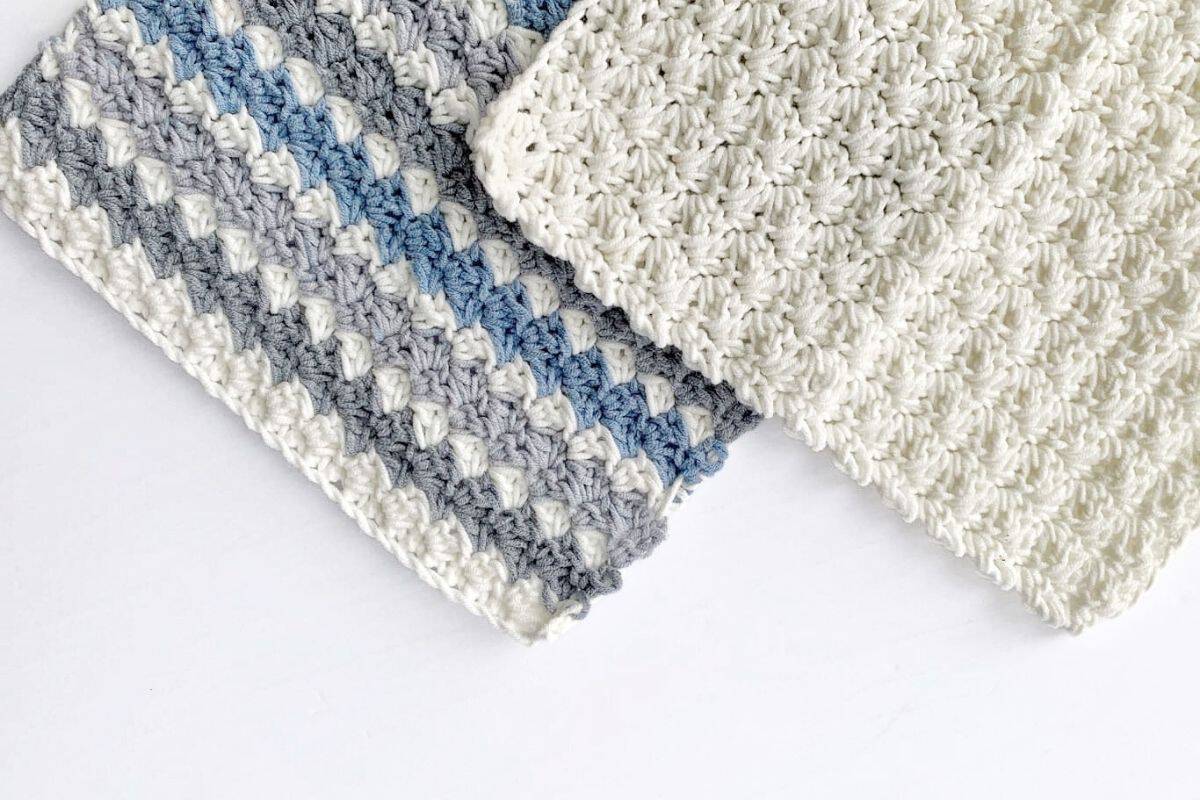
About the Suzette Stitch
The Suzette stitch is one of those crochet stitches that looks much more complicated than it actually is.
It is created by working a single crochet and double crochet into the same stitch, then skipping over the double crochet stitches on the following row.
The result is a pretty textured fabric. It’s a great stitch to learn if you’re comfortable with basic crochet stitches and want to try something new without feeling overwhelmed.
Gardenlace Dishcloth Free Crochet Pattern
Skill Level
Beginner
Abbreviations
- ch – chain
- dc – double crochet
- sc – single crochet
- sk – skip
- sl st – slip stitch
- st – stitch
- sts – stitches
Gauge
Gauge is not critical for this project.
Finished Measurements
Approximately 9″ x 9″ (23 x 23 cm)
The finished size of this dishcloth is approximately 9″ x 9″, but it’s easy to customize.
To make your dishcloth wider, chain any multiple of 2 + 1 until you reach your desired width.
To make it longer, simply repeat Row 3 until your dishcloth reaches the desired length.
Materials Needed
5.50 mm (I) crochet hook
Approximately 84yds/1.75oz – 77m/50g of worsted weight cotton yarn
Yarn Used
Multi-Coloured Version
Caron Cotton Cakes – Nested Blues (colours separated into individual balls)
Caron Cotton Cakes – Cream
Solid Version
Caron Cotton Cakes – Cream
Colour A (Cream): 31 yds (29 m) / 0.64 oz (19 g)
Colour B (Dark Grey): 21 yds (19 m) / 0.43 oz (13 g)
Colour C (Light Grey): 21 yds (19 m) / 0.43 oz (13 g)
Colour D (Blue): 21 yds (19 m) / 0.43 oz (13 g)
Tapestry Needle
Stitch Markers
Scissors
Measuring Tape
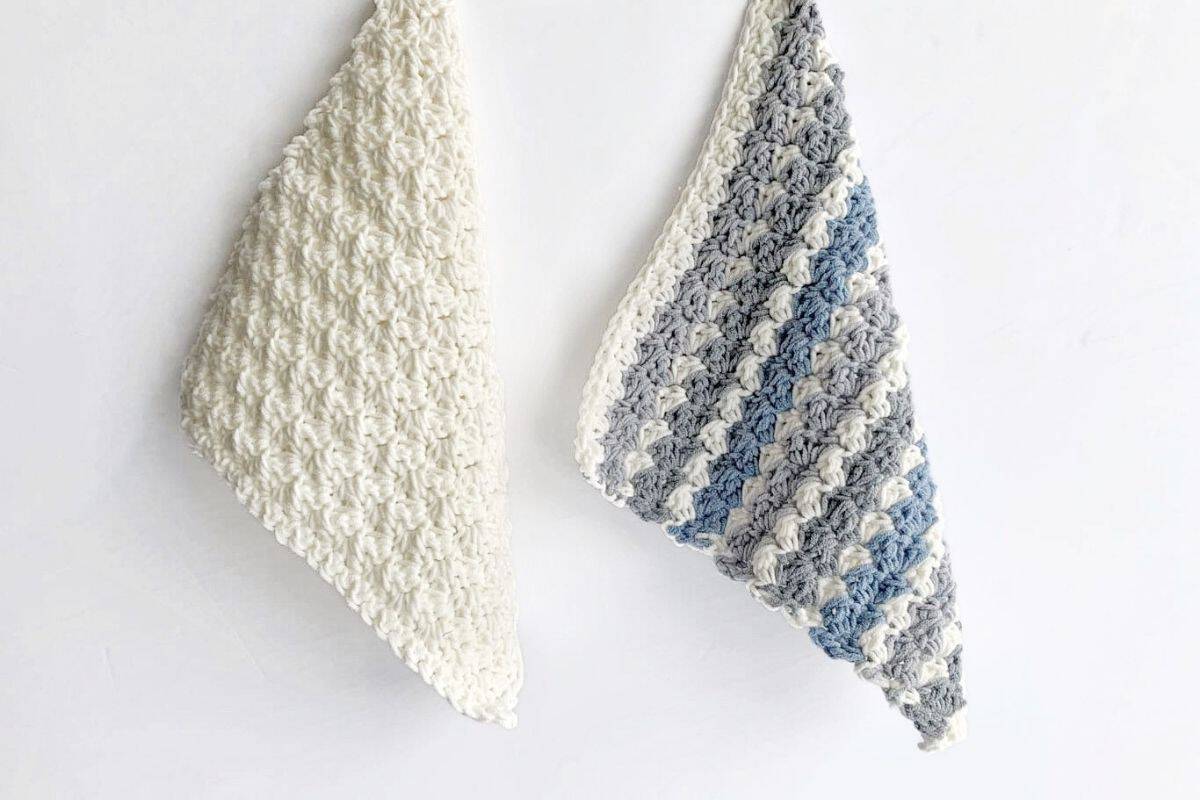
Colour Striping Instructions
For the striped version shown:
- Colour A (Cream) – 1 row
- Colour B (Dark Grey) – 2 rows
- Colour A (Cream) – 1 row
- Colour C (Light Grey) – 2 rows
- Colour A (Cream) – 1 row
- Colour D (Blue) – 2 rows
Repeat this colour sequence until your dishcloth reaches the desired length.
Tip: Change colours during the final yarn over of the last stitch of the previous row for neat, seamless colour changes.
Notes
- Turning chains do not count as stitches.
- Stitch count remains 30 stitches throughout the pattern.
- Ch 1 at the end of each row, then turn.
- To make a different size dishcloth, begin with any multiple of 2 + 1 chains and continue repeating Row 3 until the desired length is reached.
Special Stitch
Suzette Stitch
The body of this dishcloth is worked using the Suzette Stitch, a simple combination of a single crochet and double crochet worked into the same stitch.
Note: Throughout the pattern you will always skip the double crochet stitches and work into the single crochet stitches from the previous row.
How to make colour changes
- Work to the end of the row with the main colour to last stitch.
- When you reach the last stitch of the row, work the stitch as you normally would, but stop just before the last step of the stitch. Work a single crochet stitch, insert your hook, yarn over with the main colour, and draw up a loop, but do not complete the stitch
- Drop the main colour yarn and pick up the contrast colour yarn.
- Yarn over with the contrast colour and draw the loop through the two loops on the hook to complete the last stitch of the row.
- Chain one with the contrast colour to start the new row.
- Turn the work and work the next row with the contrast colour.
- Repeat this same method each time you make a colour change.
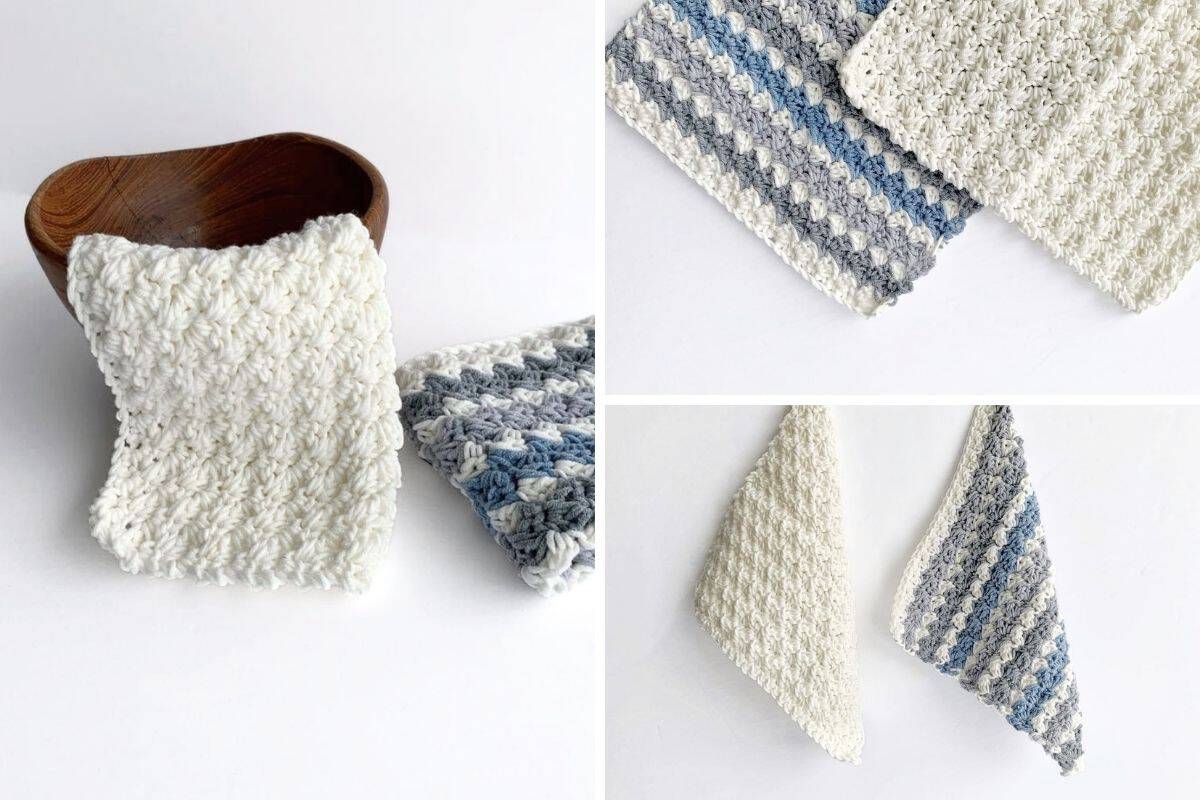
Gardenlace Dishcloth Pattern
Chain 31
If you want to adjust the width of the dishcloth you will want to chain more or less for your starting chain. Just be sure that it is a multiple of 2 + 1
Row 1: Sc in 2nd and each ch across till end of row. Ch 1, turn. (30)
Row 2: Sk 1st sc, (sc, dc) in next sc. *Sk next sc, (sc, dc) in next* rpt from * to * till end of row. Ch 1, turn. (30)
Row 3: Sk 1st dc, (Sc, dc) in 1st sc, *Sk next dc, (sc, dc) in next sc* rpt from * to * till end of row. Ch 1, turn. (30)
Can I Use Acrylic Yarn for a Dishcloth?
This is a question that comes up often, and the answer is yes… you can use acrylic yarn if that’s what you have available.
Traditionally, dishcloths are made with cotton because cotton is absorbent, durable, and holds up well with repeated washing. If you are making a dishcloth specifically for drying dishes or wiping counters, cotton is usually the best choice.
That being said, yarn can be expensive, and many crocheters already have a beautiful acrylic stash waiting to be used. There is absolutely no reason you cannot make this pattern with acrylic yarn.
Acrylic works well if you are using your Gardenlace Dishcloth as:
- A decorative kitchen accent
- A washcloth
- A face cloth
- A small handmade gift
- A way to practice the stitch before using cotton
The best yarn is often the yarn you already have and love working with.
Yarn and Colour Combination Ideas
The Gardenlace Dishcloth is a great pattern for playing with colour. The simple stitch texture really shows off stripes, gradients, and colour changes.
Here are a few combinations I think would be beautiful:
Classic Farmhouse
- Cream
- Soft grey
- Charcoal
- Natural beige
Fresh Spring Garden
- Sage green
- Cream
- Soft pink
- Pale yellow
Coastal Cottage
- Sand
- Light blue
- Navy
- White
Modern Neutral
- Oatmeal
- Taupe
- Mushroom
- Ivory
Bright and Cheerful
- Aqua
- Coral
- Yellow
- White
Scrap Yarn Version
This pattern is also perfect for using leftover cotton scraps. Try changing colours every row or creating a random stripe pattern for a fun, one-of-a-kind dishcloth.
Handmade Gift Ideas
A handmade dishcloth may be a small project, but it makes such a thoughtful gift.
Try pairing your Gardenlace Dishcloth with:
A Kitchen Gift Basket
- Two or three dishcloths
- A wooden spoon
- A tea towel
- A favourite recipe card
A Housewarming Gift
- Neutral-coloured dishcloths
- A candle
- A small plant
A Spa Gift Set
- A matching washcloth
- Handmade soap
- Bath salts
Teacher or Hostess Gifts
A stack of handmade dishcloths tied with ribbon makes an affordable and thoughtful gift.
Frequently Asked Questions
What yarn is best for crochet dishcloths?
Cotton yarn is usually the best choice because it is absorbent, durable, and easy to wash. However, you can use other yarn fibres depending on how you plan to use your finished project.
Can I make this dishcloth larger?
Yes! To make it wider, start with any multiple of 2 + 1 chains. To make it longer, simply repeat Row 3 until you reach your desired size.
Is the Suzette stitch beginner-friendly?
Yes! If you know how to make a single crochet and double crochet, you can make this stitch. The first few rows may feel different, but once you get into the rhythm it works up quickly.
How much yarn do I need?
This dishcloth uses approximately 40 grams (70 metres / 77 yards) of worsted weight cotton yarn.
Can I sell finished dishcloths made from this pattern?
Yes, you may sell finished items made from this pattern. I always love seeing what you create!