


Crochet symbol charts can look like a completely different language the first time you see one. All those little lines, circles, crosses and shapes can be pretty confusing when you are used to following written instructions.
The good news is that once you know a handful of the most common crochet symbols, they start to make a lot more sense.
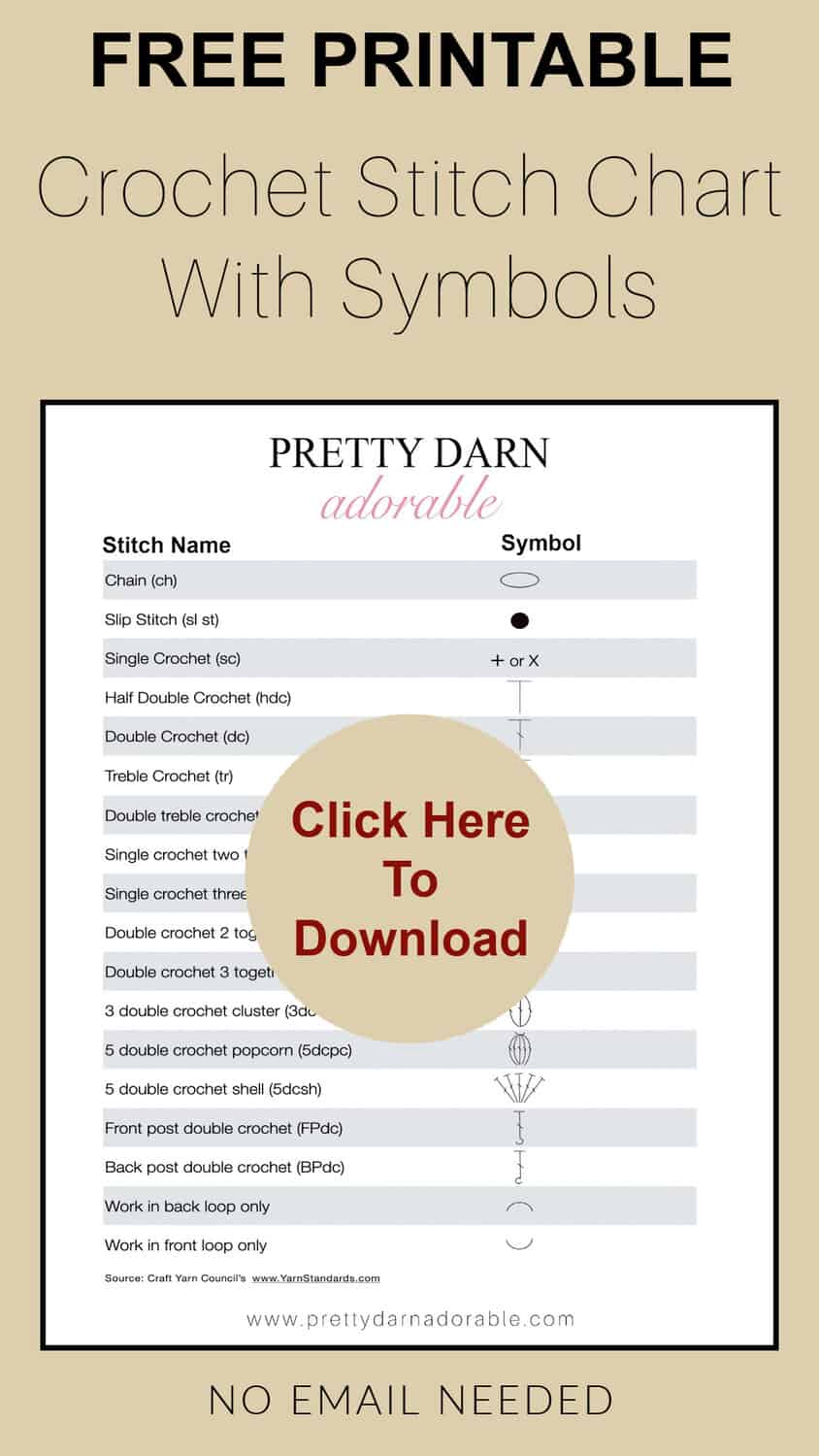
I created this free crochet symbols chart printable as a quick reference you can keep with your crochet patterns. It includes many of the basic symbols you will come across in crochet charts, so you don’t have to stop and search for them every time.
You can download the printable below and keep it in your project bag, crochet binder or wherever you keep your favourite patterns.
[PHOTO/DOWNLOAD: FREE CROCHET SYMBOLS CHART PRINTABLE]
What Is a Crochet Stitch Chart?
A crochet stitch chart is a visual representation of a crochet pattern. Instead of describing every stitch with words and abbreviations, a chart uses stitch symbols to show you which stitches to make and where to work them.
Each symbol represents a stitch or a group of stitches.
For example, you may see symbols representing:
- Chain stitches
- Slip stitches
- Single crochet
- Half-double crochet
- Double crochet
- Treble crochet
- Double treble crochet
- Shell stitches
- Post stitches
- Crochet increases and decreases
Once you understand the stitch key, you can look at a visual diagram and get a pretty good idea of how the finished stitch pattern is constructed.
This can be especially helpful for visual learners who find it easier to see the pattern rather than read several lines of written instructions.
Why Learn How to Read Crochet Charts?
You certainly don’t have to use crochet diagrams to crochet. Most of my own crochet patterns use written instructions.
But knowing how to read them is a handy skill to have.
A visual representation of a crochet pattern can make it easier to understand where stitches are being placed, especially when you are working a border, motif, granny square or more complicated pattern.
A chart can also help you:
- Check the number of stitches in a repeat
- See where a chain space belongs
- Understand where several stitches are worked into the same stitch
- Follow increases and decreases
- See how individual rows relate to each other
- Compare a chart with a written pattern when something doesn’t seem quite right
Sometimes seeing the stitch diagram beside the written instructions is all it takes for a confusing section to suddenly make sense.
Understanding the Crochet Symbol Chart
The Craft Yarn Council has standardized many of the common symbols used in crochet patterns.
You should still check the pattern key included with the pattern you are using because designers may occasionally use slightly different symbols or include a special stitch that needs its own explanation.
Here are some of the basic crochet symbols you are likely to see.
Chain Stitch
A chain is usually represented by a small oval.
A row of ovals represents a series of chain stitches. At the beginning of a project, these may represent your beginning chain or foundation chain.
When a chain appears between other stitches later in the pattern, it may create a chain space.
Slip Stitch
The slip stitch symbol is usually a small filled dot.
Slip stitches are commonly used to join rounds, move across stitches without adding height or finish an edge.
Single Crochet Stitch
A single crochet stitch is commonly represented by an X or a plus sign.
When several of these symbols appear side by side, you will work one single crochet for each symbol unless the pattern tells you otherwise.
Half-Double Crochet
The half-double crochet symbol looks similar to a T.
As you start learning the symbols, you will notice that the taller crochet stitches build on this same basic shape.
Double Crochet Stitch
The double crochet symbol looks like a tall T with a line crossing through the stem.
That little line represents the yarn over used to make the stitch.
Treble Crochet
A treble crochet looks similar to the double crochet symbol but has two lines crossing the stem.
Those extra lines are a helpful clue because a treble crochet uses more yarn overs than a double crochet stitch.
Double Treble Crochet
A double treble follows the same idea again, with another line added to the symbol.
Once you understand this system, the taller stitches become much easier to recognize.
How to Read Crochet Symbol Diagrams
Before starting any crochet symbol diagram, look for the starting point.
Most charts use row numbers, round numbers, arrows or another marker to show where to begin.
For a flat piece of crochet, you will usually start at the bottom of the chart with the first chain or foundation row.
For right-handed crocheters, the first row is commonly read from right to left, with the next row worked back in the opposite direction. The rows continue alternating as the work turns.
Left-handed crocheters may need to read the chart in the opposite direction. Always check the arrows, row numbers and instructions included with the pattern because chart construction can vary.
Charts worked in rounds are usually read from the centre outward rather than back and forth in rows.
How Do You Know Where to Put Each Stitch?
The position of each symbol is just as important as the symbol itself.
Look at the base of the stitch on the chart. It should show you where that stitch is worked.
A symbol may be positioned:
- Into the top of a stitch
- Into a chain
- Around a post
- Into the front loop
- Into the back loop
- Into a chain space
- With several stitches worked into the same place
This is where crochet symbol charts can be really helpful.
Instead of trying to picture a long line of written instructions in your head, you can actually see how the stitches connect.
What About the Right Side and Wrong Side?
Some stitch charts are designed to show how the stitches appear from the right side of the work.
When you turn your work, you may be working a wrong side row even though the chart is showing the overall stitch construction from the front.
That is another reason to read the written pattern and chart together when both are provided.
A row counter or stitch markers can also be helpful when you are learning to follow charts. Marking your current row makes it much easier to keep your place.
Are Crochet Symbols the Same in US and UK Patterns?
The symbols themselves make it easier to follow patterns from different places because you are looking at the stitch construction rather than relying only on stitch names.
However, US crochet terms and UK crochet terms are different.
For example, the stitch called single crochet in US terminology has a different name in UK terminology.
Always check whether the written pattern uses US terms or UK terms and refer to the stitch key included with the pattern.
This is especially important when you are using older crochet books, international patterns or patterns you find online.
Should Beginners Learn Crochet Charts?
Absolutely, but you don’t need to memorize an entire page of symbols at once.
Start with the basic stitches you already know.
Learn the symbols for chain, slip stitch, single crochet, half-double crochet and double crochet first. Then add more advanced stitches as you come across them in your projects.
With a little practice, you will start recognizing the symbols without needing to check the chart every time.
Think of this printable as a beginner’s guide rather than something you need to memorize.
Download Here
You may find that once you get comfortable reading crochet charts and diagrams, they become one more tool you can use alongside written instructions.
And sometimes, especially when a complicated section of a pattern isn’t quite clicking, that little visual diagram can make all the difference.
Crochet Symbols FAQ
What do crochet symbols mean?
Crochet symbols are small shapes used to represent different crochet stitches. Each symbol corresponds to a stitch such as chain, slip stitch, single crochet, double crochet or treble crochet.
Do all crochet patterns use the same symbols?
Many designers use standardized symbols, but you should always check the pattern key before starting. Some patterns use additional symbols for special stitches or stitch combinations.
Are crochet charts easier than written patterns?
That depends on how you like to learn. Some crocheters prefer written instructions, while visual learners may find crochet diagrams much easier to follow. Using both together can be especially helpful.
Where do I start reading a crochet chart?
Look for the row or round marked number one, an arrow or another starting marker. Flat charts usually begin along the bottom. Charts worked in rounds generally begin near the centre.
Do I need to memorize all the crochet symbols?
No. Start with the common symbols for the stitches you use most often. Keep this printable nearby and refer to it whenever you come across a symbol you don’t recognize.
One More Thing Before You Go
Want more handy crochet resources?
My Freebie Library has printable crochet resources, tags, planners and patterns you can download and keep.
I just made one of your baby hats for our local hospital. I have made one hat a day for them for the past five years, plus many extra hats for the nurse’s, friends and friends of friends and family. I am always looking for new ideas, and am excited to have found your site. I cannot afford to purchase patterns, plus all the yarn that I use. This is my mission in my retirement (I am 79). My husband’s mission is to fund what I do and admire my work. Thank you for what you do.